
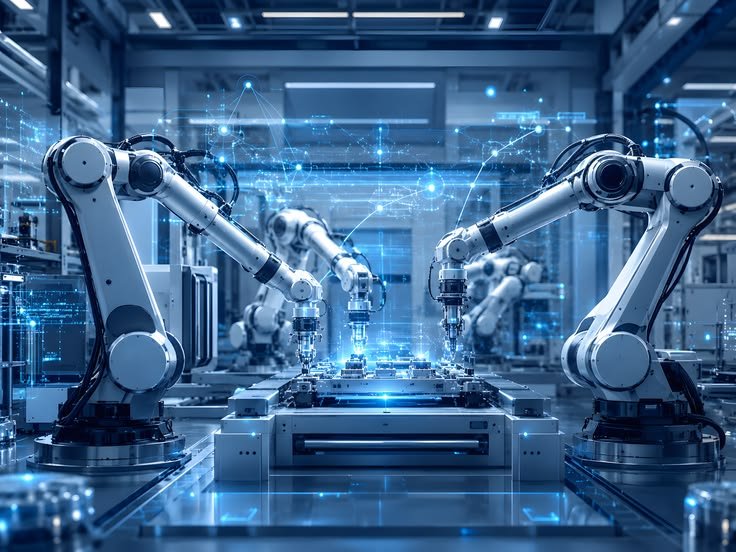
Europe’s manufacturing industry is increasing its focus on physical artificial intelligence as advances in robotics, computing and AI models create new possibilities for machines that can operate in the real world.
Nvidia CEO Jensen Huang has argued that Europe’s strength in engineering, electronics and precision manufacturing could give the region an advantage in the development of intelligent robots and automated industrial systems.
German robotics company Agile Robots plans to produce between 1,000 and 2,000 small humanoid robots beginning next year as part of a broader expansion in AI-powered manufacturing technology.
Technology companies are also developing new computing platforms designed to train and operate robots, autonomous machines and intelligent factory systems.
The push reflects a wider shift in artificial intelligence. While much of the first wave of generative AI focused on software, chatbots and digital services, companies are increasingly exploring systems capable of understanding and interacting with the physical world.
Europe’s large industrial base could provide a significant testing ground for the technology, particularly in automotive production, logistics and advanced manufacturing.
However, humanoid robotics remains an emerging field. Demonstrations continue to show that even advanced machines can struggle with relatively simple real-world tasks, highlighting the technical challenges that remain before widespread deployment.
The next phase of the AI race may therefore extend beyond data centres and software into factories, warehouses and machines operating alongside humans.